Affiliate
Affiliate link rot is a revenue problem, not a hygiene ticket
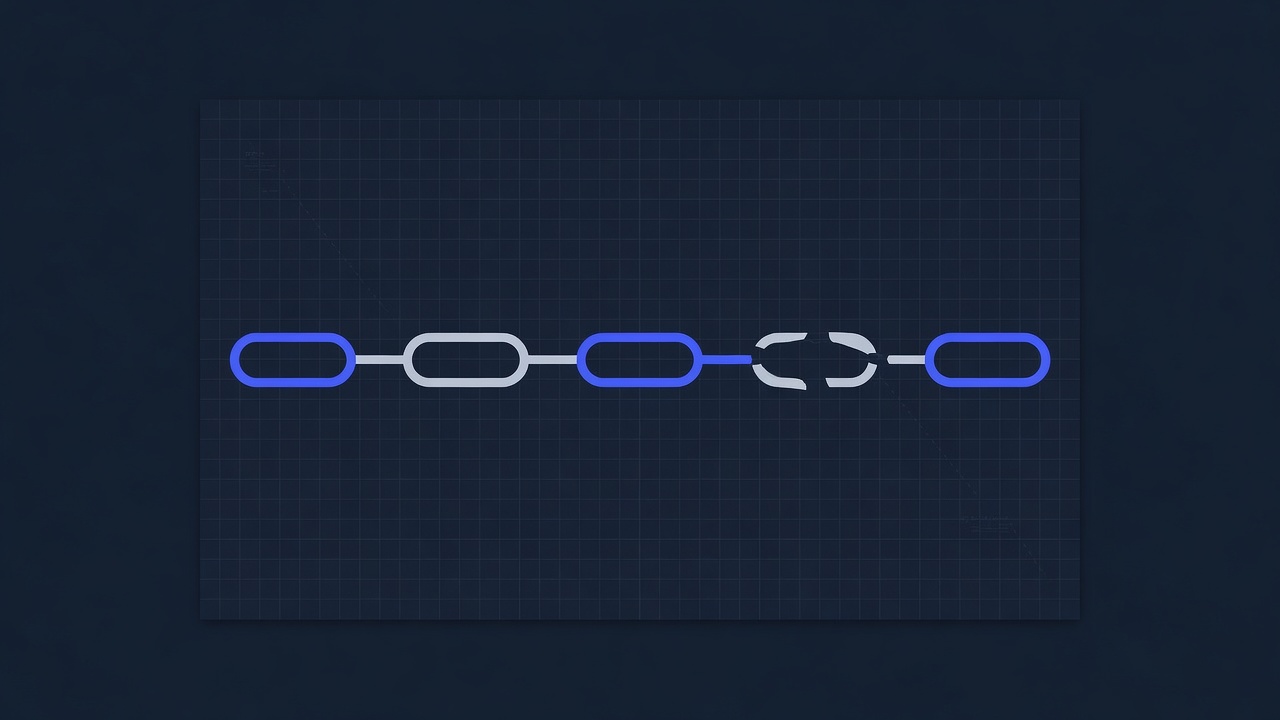
A 404 on an affiliate URL is the honest failure. You lose the click, the reader sees an error, and whoever owns the page eventually notices. The expensive failures do not look like that.
The leak does not look like a 404
The merchant reorganises the catalogue and 301s your deep link to a category page. The link “works”. The reader lands on a grid of leftovers. Your conversion rate falls and nobody can say why, because every checker you ran still reports 200.
Or the offer is simply gone. Same URL, same 200, different page. The comparison you ranked for no longer exists; the page now sells the successor SKU, a subscription, or nothing in particular. That is content drift, and a status-code checker is structurally blind to it.
What the 160-million-dollar figure actually measured
Trackonomics — later part of impact.com — scanned thousands of publisher pages and put a number on this class of decay: on the order of 160 million dollars a year in lost affiliate revenue, with almost half of pages that carried affiliate links showing some form of rot.
The exact total is several years old and not the point. The point is the shape. Affiliate links are not owned by the publisher. Merchants move, delist, geo-block and rewrite without sending a changelog. A quarterly crawl with a broken-link checker will catch the 404s. It will not catch a destination change, and it will not catch a page that kept its URL while dropping the offer.
How to scan a money page
- Pick the URLs that actually earn — the comparison table, the round-up, the coupon list — not the whole sitemap on day one.
- Watch those outbound links on a schedule. Follow redirects to the end, not the first hop.
- Fingerprint the page you meant, so a 200 that is no longer that page shows up as drift.
- Retry before flagging, so a flaky CDN is not an incident. When a merchant genuinely moved the product, accept the new URL as baseline and stop being notified.
What to do with the list
RotSweep is built for that list. Projects are categories, not websites, so “Amazon”, “retail partners” and “own-brand” can live side by side. The digest is one email when something changed, and silence when nothing did.
Deep Sweep includes content drift; on Daily Sweep it is a €6 add-on. See pricing. Slack and webhooks are not available yet — email is the channel today.